The rent is now arriving.
Galaxy Digital’s third quarter 2026 results, released October 27, gave the market its first full quarter of numbers from the Helios data center campus in Texas operating as an AI facility. Leasing revenue in the company’s data center segment rose to $79.1 million, up from $18.9 million in the second quarter, and segment adjusted EBITDA climbed to $68.7 million from $11.5 million, according to figures reported by The Energy Mag.
Those results matter well beyond one company. Helios started life as a bitcoin mining site. Its conversion into leased AI capacity for CoreWeave is one of the clearest working examples of how existing power-rich industrial sites can be turned into AI infrastructure faster than greenfield projects.
Phase I Delivered, and Now Earning
Galaxy reported in its second quarter release that it had delivered Phase I of Helios to CoreWeave on schedule: 200 megawatts of gross power supporting 133 megawatts of critical IT load, under a 15-year lease. All 133 megawatts was in service by the end of June.
At the time, Galaxy said it expected roughly $80 million in quarterly leasing revenue from that phase starting in the third quarter. The reported $79.1 million lands almost exactly on that guidance.
That kind of precision is what infrastructure investors pay for.
Galaxy also expects lease-level adjusted EBITDA margins above 90%, excluding overhead. For a business that was best known for digital asset trading, a long-dated lease with a single large compute tenant changes the profile of its earnings.
Phase II Is Financed and on Schedule
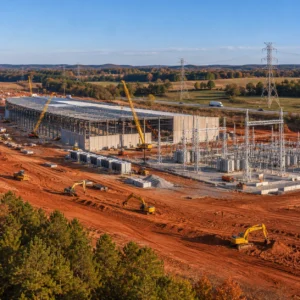
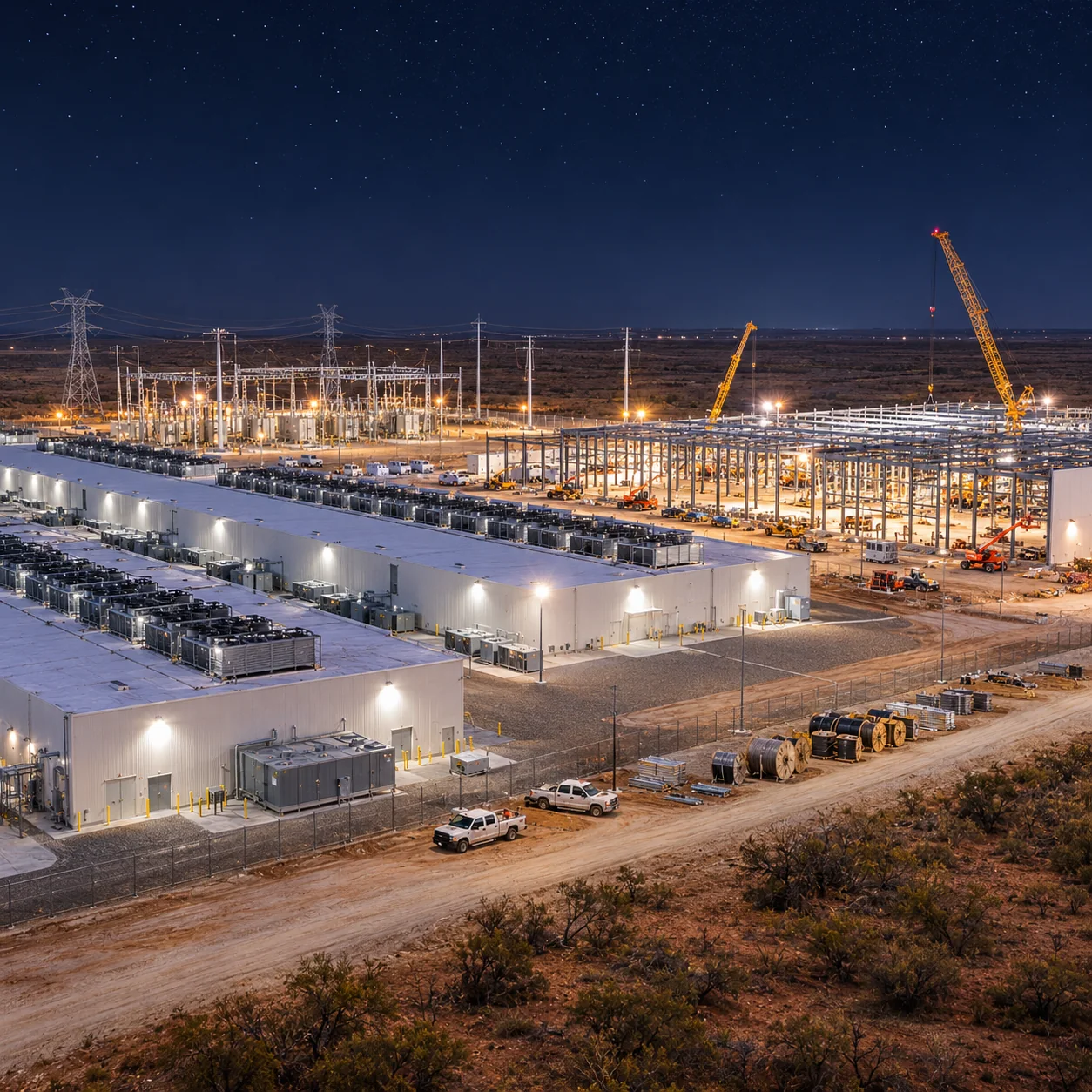
The next stage is already under construction. Phase II adds 260 megawatts of critical IT capacity for CoreWeave, with HITT Contracting serving as general contractor and data hall deliveries targeted to begin in the second quarter of 2027.
Galaxy describes Phase II as fully financed, on schedule and within budget. A project subsidiary issued about $3.5 billion of senior secured notes due 2031 on July 28, 2026 to fund the build. The Energy Mag reports an estimated construction cost of $4 billion for the phase and anticipated annual base revenue of $675 million once fully delivered, compared with $1.8 billion in cost and $315 million in annual base revenue for Phase I.
Capital spending reflects the pace. Galaxy’s data center capex reached $757 million in the third quarter, up 69% from $448 million in the second.
Across all three phases, CoreWeave has contracted for 526 megawatts of critical IT capacity, supported by 800 megawatts of gross power. The final 133 megawatt phase is scheduled to begin generating rent in 2028, and Galaxy forecasts more than $1 billion in average annual revenue across the three phases over the 15-year base lease term.
Why Converted Sites Move Faster
Galaxy acquired the Helios site from Argo Blockchain for $65 million in December 2022 and signed its first CoreWeave lease in March 2025. Little more than a year later, the first phase was fully in service.
That timeline is the real story for developers.
The scarce input in AI infrastructure is no longer land or buildings. It is approved, deliverable power. Former crypto mining sites in Texas were built around large grid connections, and that head start can compress the longest part of any AI campus schedule. The work then becomes a question of converting a site designed for low-cost, interruptible mining loads into one that meets the density, cooling and reliability requirements of a hyperscale compute tenant.
For developers and investors weighing similar conversions, Helios points to several practical lessons:
- Approved grid capacity is the asset that determines how fast a campus can grow.
- A creditworthy anchor tenant on a long lease makes large project debt possible.
- Phased delivery lets revenue from early halls start before later ones are built.
- Experienced general contractors help hold schedules as phases scale up.
- Clear guidance, and then hitting it, builds credibility with lenders.
A Larger Texas Pipeline Behind Helios
Helios is only part of Galaxy’s position. The company says it is in discussions with prospective tenants for 830 megawatts of approved gross power at Helios II that has not yet been leased, and its investor materials list 5.73 gigawatts of potential gross power capacity across Texas.
In September, Galaxy said both the original Helios site and Helios II had secured approvals, while its Caspian, Selene and Helios III sites had received conditional classifications pending grid allocation.
That spread of projects at different stages of approval gives Galaxy room to match future tenants with available power, rather than chasing power after a lease is signed.
What the Market Should Take From Helios
AI data center development is often described in announcements measured in gigawatts and tens of billions of dollars. The harder evidence is quarterly: halls delivered, rent collected, debt raised and construction milestones met.
Can a converted mining site carry hyperscale AI workloads?
Can it earn the margins that justify billions in new debt?
On the evidence of Galaxy’s third quarter, Helios is answering both. The next test arrives in the second quarter of 2027, when the Phase II halls begin to come online.
Power made Helios possible. Execution is what is turning it into infrastructure.