The next large AI campus is heading to rural Alabama.
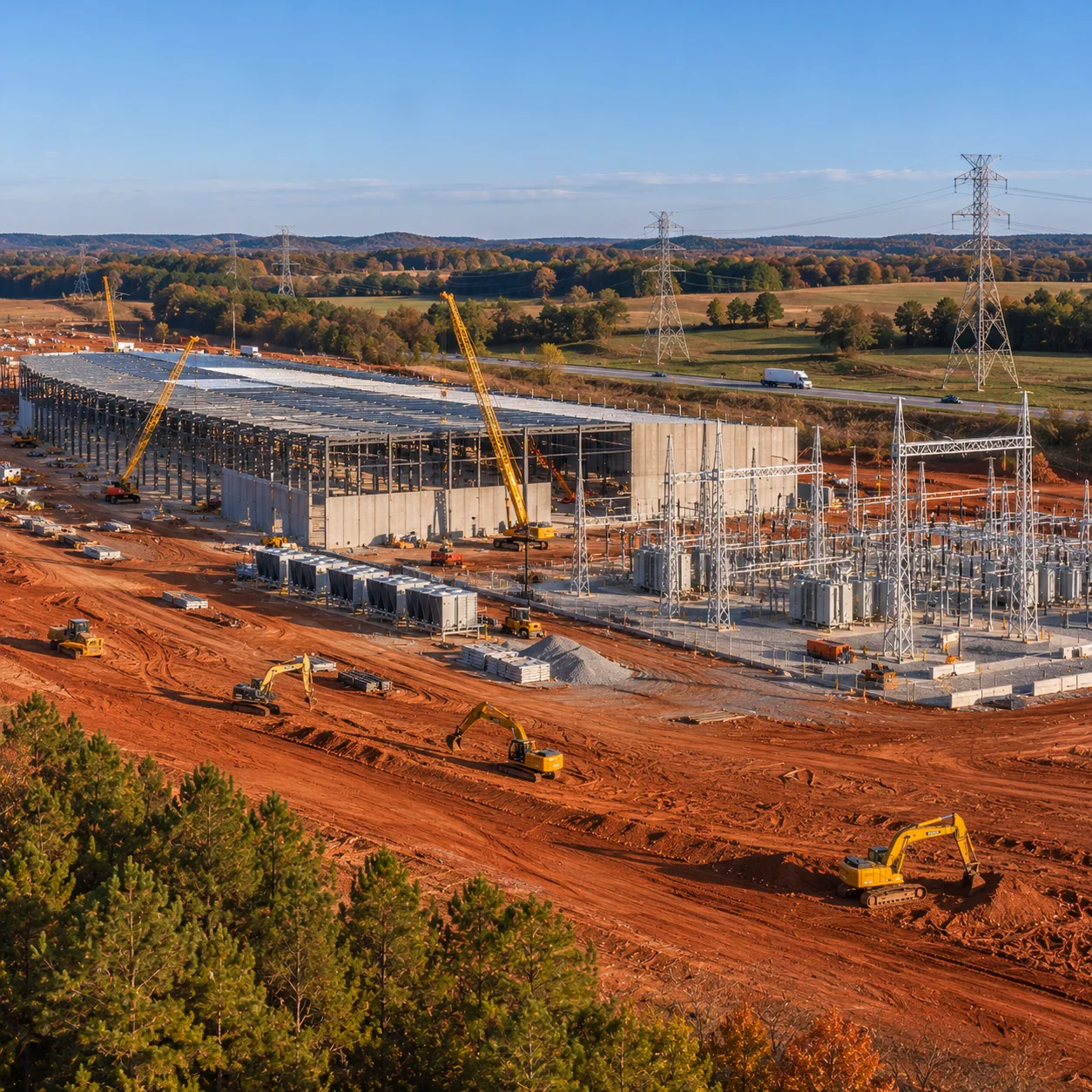
On November 4, 2026, Lambda announced it will be the end user of the Red Clay Technology Center Campus in Lowndes County, Alabama, with an estimated investment of $33.1 billion in the state. The site, near U.S. Highway 80 and Alabama Highway 21, has been prepared by developer Cloverleaf Infrastructure.
Construction is expected to begin in the first quarter of 2027 and take up to five years. Lambda says the project will create more than 1,000 construction jobs and more than 225 full-time roles in operations, technical and support functions.
The size of the number draws attention. The structure of the deal is what other developers should study.
A Neocloud Commits to Owning Its Next Chapter
Lambda, founded in 2012 by machine learning engineers, describes itself as an AI cloud provider serving tens of thousands of customers and building supercomputers for AI training and inference. Red Clay marks a move from renting and filling capacity to anchoring a campus at a scale usually associated with hyperscalers.
Baxtel, citing Data Center Dynamics, reports that the campus is planned at about 1 GW with room to reach 1.5 GW, with first operations targeted for the fourth quarter of 2028. Lambda itself says final design details are still being developed.
The split of roles matters. Cloverleaf prepared the site. Lambda will build and run the compute. That division lets a specialist site developer carry early entitlement and utility work, and hands a compute operator a site that is closer to construction ready.
“Cloverleaf is pleased to announce that Lambda will serve as the end user for Red Clay Technology Center Campus,” said David Berry, co-founder and CEO of Cloverleaf Infrastructure.
Paying for the Grid Up Front
Power will come from Alabama Power, pending regulatory approval. The more important commitment is who pays.
Lambda says it will cover the full cost of the power and grid infrastructure the campus needs through upfront commitments, so the expense is not shifted to existing Alabama Power customers. Both Lambda and Alabama Power have signed the White House Ratepayer Protection Pledge.
That is quickly becoming the price of admission.
Utilities and regulators across the country are asking the same question of every large load: who carries the cost of new substations, transmission and generation if demand changes? A developer that answers it in the announcement, rather than in a rate case months later, removes one of the biggest sources of delay between site control and energization.
Water and Design Built Into the Pitch
Lambda says the campus will use a closed-loop cooling system that significantly reduces water use compared with traditional systems. It also plans to partner with N-Drip to help local farmers conserve water, with the goal of returning at least as much water as the campus uses.
Site design includes setbacks, buffers, noise reduction measures, DarkSky lighting and sight-line modeling to limit the impact on neighbors.
“We take seriously our responsibility to develop this project thoughtfully,” said Michel Combes, chief executive officer of Lambda. Stephen Balaban, Lambda’s co-founder and chief technology officer, put it more directly: “Building a successful project starts with building strong relationships in the community.”
What a Rural County Gets From a Hyperscale Campus
The economic case for Lowndes County is substantial. According to Lambda, the project is expected to generate:
- More than $2.8 billion in projected local tax revenue through 2049
- More than $1.6 billion of that for Lowndes County Public Schools
- About $3.4 billion in combined state and local tax revenue over the same period
- A $10 million community benefits agreement with the Central Alabama Community Foundation, funded by Lambda and Cloverleaf
- More than 1,000 construction jobs and more than 225 permanent roles
“More than $1.6 billion in project revenue for local schools represents a significant, long-term investment,” said Samita Jeter, superintendent of Lowndes County Public Schools. Thomas Ellis, chairman of the Lowndes County Economic Development Commission, said the county “worked hard to secure this investment because we believe in what it will mean for our community’s future.”
For a rural county, those figures can reshape public budgets for a generation.
Alabama Becomes a Serious Option for AI Builders
Red Clay is a signal about where the next wave of AI capacity can go. Developers looking for land, a willing community and a utility ready to plan for large loads are finding all three outside the most crowded data center markets.
For developers, the lesson is in the package: a prepared site, a named utility, an upfront grid funding commitment, closed-loop cooling and a community benefits agreement, all announced together.
For investors and lenders, those same elements reduce the risks that most often stall projects between announcement and financial close.
For utilities, a customer that pays its own way for grid upgrades is the kind of load growth that can be planned rather than feared.
The remaining steps are clear. Regulators must approve the Alabama Power arrangement, and construction must begin on schedule in early 2027.
AI campuses are no longer judged only by megawatts and dollars. They are judged by how well they fit the places that host them.