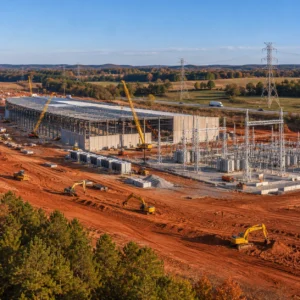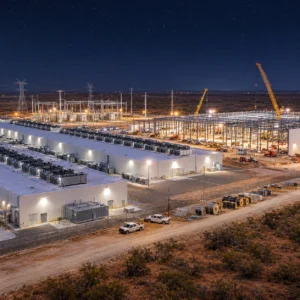
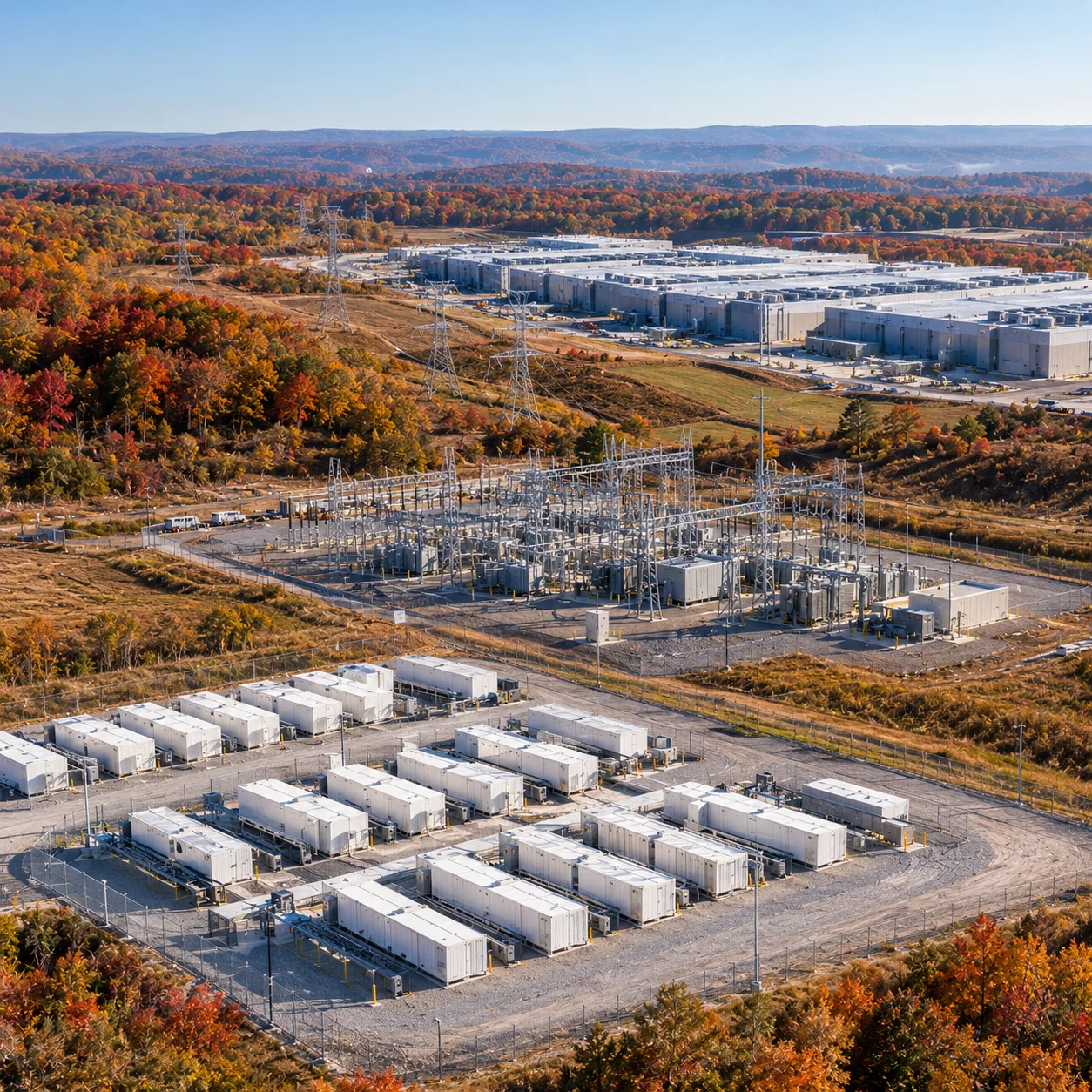
Northern Virginia is still growing.
Dominion Energy reported its third quarter 2026 results on October 30, and the headline number for the AI infrastructure market was not earnings per share. It was the size of the data center queue. According to chief financial officer Steven Ridge, the utility now has more than 54 gigawatts of data center capacity in various stages of contracting, including more than 12 gigawatts already signed under electric service agreements.
That pipeline has grown by more than 6 gigawatts, or 13%, since the end of 2025. For a market that many observers assumed would slow as power became scarce, that is a strong signal. The largest data center market in the world is not stepping back. It is contracting for more.
The Queue Is Moving From Interest to Commitment
The most useful figure in the update is the 12 gigawatts under electric service agreements.
Large load queues have a reputation for inflation. Developers file early, file in several places at once and drop projects that do not pencil out. A headline pipeline of 54 gigawatts tells the market where demand wants to go. Signed service agreements tell the market where capital is actually committing.
That distinction matters for everyone downstream. Equipment makers, transmission planners and lenders all need to know which projects are real. A contracted load under a formal agreement gives them something to plan around, and it gives the utility a firmer basis for building generation and wires.
The financial picture supports the same story. Dominion reported third quarter operating earnings of $1.28 per share, up from $1.06 a year earlier, and said it expects full year results in the top half of its original guidance range of $3.45 to $3.69 per share.
Large Customers Are Being Asked to Carry Their Own Weight
Growth on this scale only works if existing customers do not feel they are paying for it.
Ridge pointed to a large load framework approved by the Virginia State Corporation Commission in the most recent biennial review, designed so that data center customers continue to pay their fair share of the system they rely on. Chief executive Bob Blue said residential electric bills are forecast to rise by about 2.3% a year on average while the company meets customer needs and protects reliability.
That combination is becoming the template across the country. Utilities that want to keep winning hyperscale load are pairing aggressive growth plans with rate structures that put the cost of that growth where it belongs.
It is a political necessity as much as a financial one.
Offshore Wind Is Nearing the Finish Line
Serving that demand requires new supply, and the largest single piece of Dominion’s build is now close to complete.
On the call, Dominion said the Coastal Virginia Offshore Wind project is approximately 85% complete, with 44 turbines installed representing more than 640 megawatts. The company expects to energize the third and final offshore substation by the end of 2026 and still expects project completion by the end of 2027. Ridge said the budget remains $11.65 billion, including $123 million of unused contingency.
For data center developers in the region, that is meaningful progress. Utility scale generation delivered on budget, close to the load centers of eastern Virginia, is exactly the kind of capacity the market needs to keep interconnection timelines realistic.
Solar and Storage Are Being Pulled Forward
The other major signal came from Dominion’s Virginia Integrated Resource Plan update, filed in mid October.
Compared with the previous plan, Blue said the company has added and accelerated 4 gigawatts of solar and 2 gigawatts of battery storage. Ridge put the storage shift in sharper terms: planned battery capacity for 2030 to 2034 rises from 850 megawatts in the 2025 plan to 3.3 gigawatts in the 2026 update. He described each gigawatt of storage as roughly $2.5 billion to $3 billion of investment opportunity.
Storage is a natural fit for data center growth. It can be built faster than most generation, it helps manage peaks and it gives grid operators flexibility as large loads ramp up over several years.
The direction is clear.
Virginia is not relying on one technology to meet AI demand. It is layering offshore wind, solar, batteries and existing generation into a portfolio sized for a much larger load.
What the Market Should Take From Virginia
Dominion’s update offers a practical checklist for the rest of the industry. The utilities that will capture the next wave of AI infrastructure are the ones that can show:
- A pipeline that converts into signed service agreements, not just applications
- A regulator approved tariff that protects existing customers
- Large generation projects delivered close to schedule and budget
- Fast, flexible resources such as battery storage added early in the plan
- Steady earnings that keep capital markets open for the build
For developers, the lesson is that Virginia remains open for business, but on clearer terms. Projects that can sign firm agreements and accept cost responsibility will move ahead. Speculative requests will find the queue less forgiving.
For investors, a regulated utility adding gigawatts of contracted load with modest bill growth is one of the more durable ways to gain exposure to AI infrastructure demand.
Can other utilities match that conversion rate?
Can they build supply as quickly as Virginia is signing contracts?
The markets that answer yes will set the pace for the next decade of data center growth.
Northern Virginia built the first generation of the cloud. Its utility is now building the power system for the AI generation that follows.