The next gigawatt of AI capacity is heading to central Indiana.
Digital Realty has proposed a data center campus of roughly 1 GW of IT capacity on about 476 acres of greenfield land at Industrial Park North in Kokomo, near U.S. 31 and County Road 400 North and about 50 miles north of Indianapolis, according to reporting compiled by Baxtel on October 16 and 17, 2026. It would be the company’s first site in Indiana.
The scale is notable. The terms are more notable still. Digital Realty says it will fund the power and water upgrades the campus needs, is not seeking tax incentives, and plans a closed loop, air cooled design. Those three commitments answer the questions that now decide where large campuses get built.
A Gigawatt Campus Built in Phases
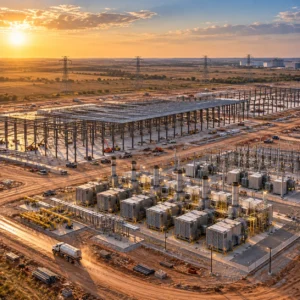
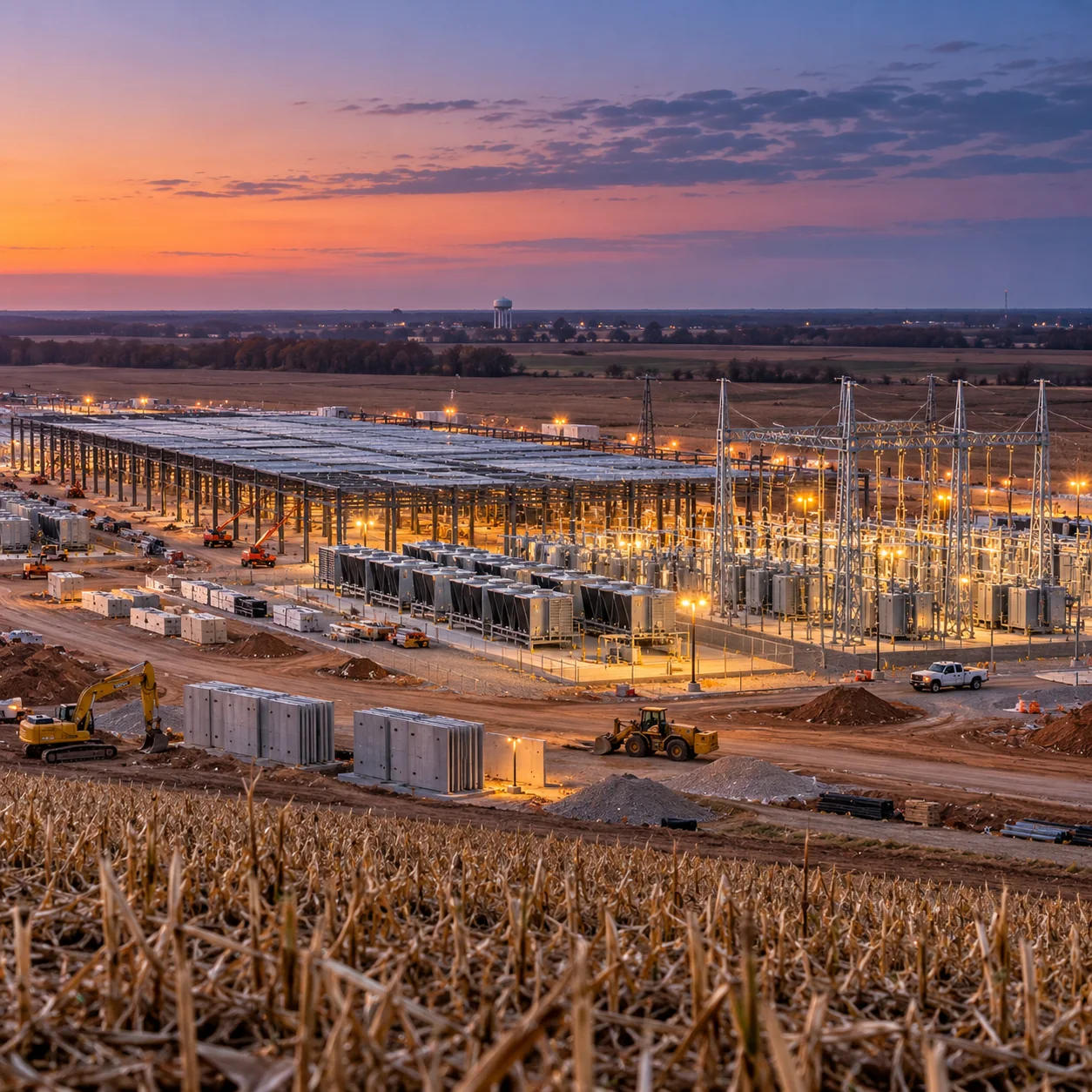
The site plan describes three single story buildings totalling about 3 million square feet, with construction expected to take four to six years and full buildout targeted for 2033.
Digital Realty representative Matt Gully told WISH-TV that the finished campus would draw about 1.5 GW, enough for roughly 1.1 million homes. Duke Energy, the local utility, would supply the electricity, and a utility spokesperson said connection agreements are still being negotiated.
Mayor Tyler Moore told Inside INdiana Business that the investment would be in the range of $1.4 billion to $1.7 billion. The city projects $1.3 billion to $1.7 billion in new taxable assessed value at completion, generating $44 million to $55 million a year in property tax revenue.
For a city the size of Kokomo, that is a meaningful new revenue base.
Who Pays for the Grid Is Now a Siting Question
Large load growth has made cost allocation a front line issue for utilities and regulators. Communities want the jobs and tax base, but residential customers do not want to absorb the cost of new substations, lines and generation built for a single campus.
Digital Realty has addressed that directly. Gully said of the infrastructure costs: “We’re not asking ratepayers to carry that.”
The commitment is voluntary, and consumer advocates have noted as much. Ben Inskeep of the Citizens Action Coalition said that no statutory protections are in place to guarantee the outcome. That is a fair point, and it is also the reason the economic development agreement still to come matters so much. A written agreement can turn a pledge into an enforceable term.
The approach also strengthens the developer’s hand. A campus that arrives with its own funding for upgrades is easier for a utility to plan around and easier for a council to approve.
Air Cooling Takes Water Off the Table
Water has become one of the first constraints planners check, often before power. The Kokomo design uses a closed loop, air cooled system that recirculates water rather than drawing it continuously.
City officials say the campus would use less water each year than local hospitals, schools, manufacturers or golf courses. Indiana American Water says its system has the capacity to serve the site, and Digital Realty has committed to funding any water infrastructure upgrades.
The design also has to meet a sustained noise limit of 50 decibels at the property line, another sign that host communities are writing performance standards into the approval process rather than debating them after construction.
No Abatement, and a Cleaner Approval Path
Tax abatements have long been part of the standard data center package. Kokomo is taking a different route. The city has said it will not grant tax breaks to any company that develops the site, and Digital Realty is not asking for one.
The local groundwork is already in place. On September 14, the Common Council voted 7 to 1 to allow data centers on all industrial sites, according to WRTV. The property itself needs no rezoning, though the council must still approve an economic development agreement, which Gully said could be drafted within weeks. Digital Realty held a public open house on October 10.
What should other developers and host cities take from the Kokomo model?
- Fund grid and water upgrades up front rather than passing them to ratepayers
- Choose cooling designs that remove water from the approval debate
- Offer clear tax value without asking for abatements
- Commit to measurable limits on noise and other local impacts
- Put voluntary pledges into a binding development agreement
Indiana’s Role in the Next Build Cycle
Indiana already hosts a sizeable data center base. Baxtel tracks 146 facilities in the state, led by Amazon Web Services with 33 sites, and the largest is Google’s 100 MW Zodiac 1 campus. A 1 GW campus in Kokomo would sit well above anything operating in the state today.
For Duke Energy, the project is a test of how quickly a regulated utility can contract and plan for a load of this size. For investors, it shows that well capitalised developers are still willing to commit to multi year, gigawatt scale buildouts outside the traditional hubs, provided the site offers land, power and a workable local framework.
The next steps are concrete: a full site plan, the utility connection agreements and the economic development agreement with the council.
Gigawatt campuses used to be judged on power alone. Kokomo shows they will increasingly be judged on who pays for it.