Capital is following control.
On September 17, Crusoe announced the initial close of a $3.9 billion Series F at a $30.9 billion post-money valuation. Atreides Management, Mubadala Capital and Valor Equity Partners co-led the round. Founders Fund, GIC, Nvidia, Qatar Investment Authority, Radical Ventures and TPG also took part.
The size of the round is striking. According to TechCrunch, the new valuation is roughly three times the $10 billion Crusoe was valued at in its October 2025 Series E. For the industry, though, the more useful signal is what investors are buying: one company that sources power, develops data centers, manufactures its own electrical equipment and sells cloud compute.
Crusoe chief executive Chase Lochmiller describes the goal as “controlling the infrastructure from electrons to tokens.” Investors have now put a very large number on that idea.
The Contract Book Is Running Well Ahead of Delivered Capacity
Crusoe says it holds more than $140 billion in total contracted value and more than 6 GW of gross contracted capacity. Just over 1 GW of that capacity has been delivered and is operating. The company also reports that Crusoe Cloud bookings have grown 20 times year over year in 2026 and that its Managed Inference business has passed $100 million in contracted annual recurring revenue.
That ratio matters.
With six gigawatts under contract and about one in service, most of the value still sits in projects that have to be powered, built and commissioned. The new capital targets that gap. Crusoe says the money will scale its existing programs and fund its own AI factories, ranging from large vertically integrated campuses to modular Crusoe Spark units.
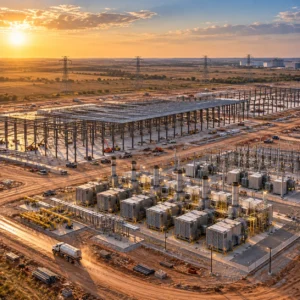
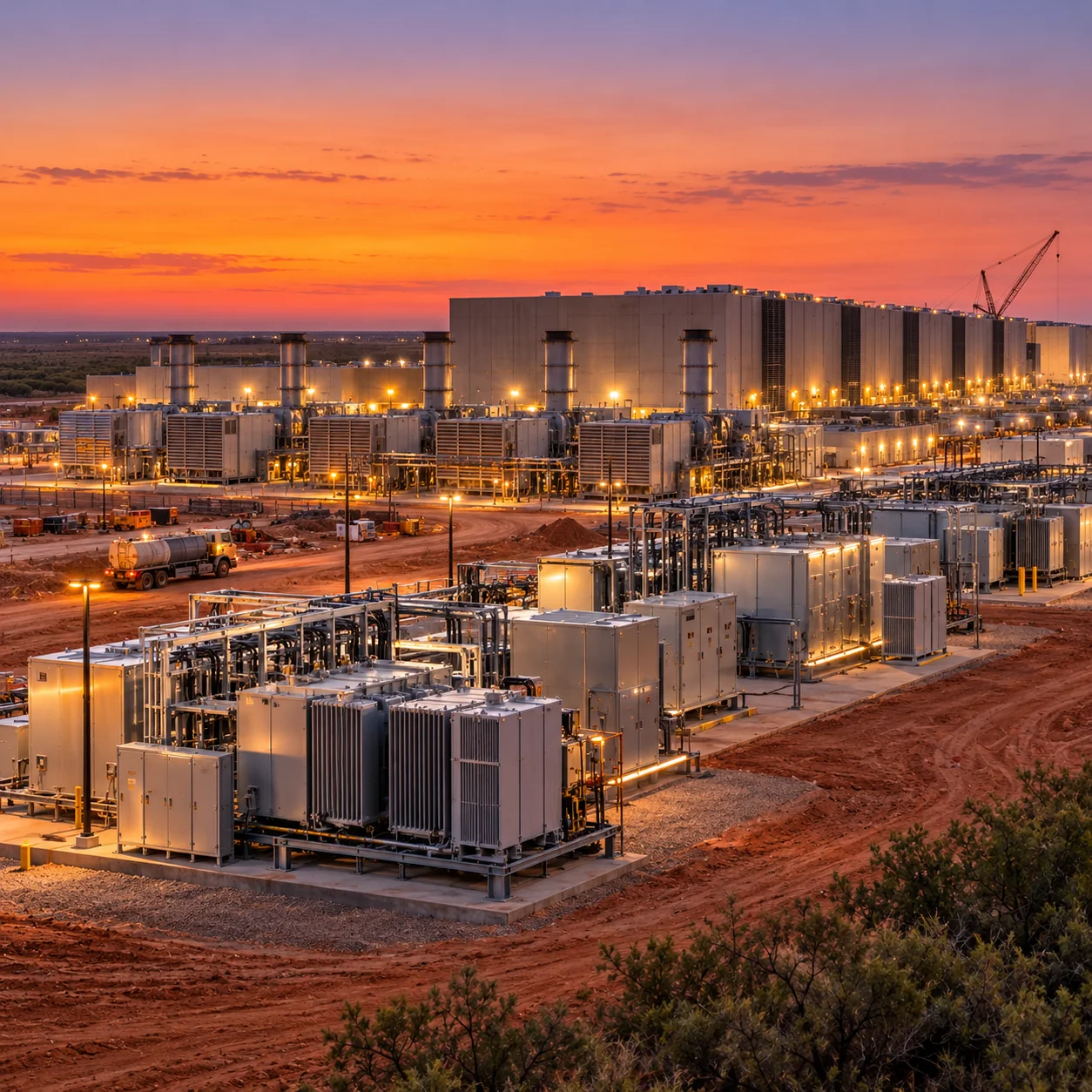
The flagship remains Abilene, Texas, the Stargate site where the company says OpenAI trained its Astra system. The announcement also names Cognition, Figure and Perplexity as customers, and TechCrunch reported a five-year, $13 billion cloud agreement with Jane Street.
Manufacturing Has Become Part of the Power Strategy
Three days before the raise, on September 14, Crusoe opened a second manufacturing facility in Tulsa, Oklahoma. The new plant adds 400,000 square feet and brings the company’s national manufacturing footprint to roughly 1 million square feet.
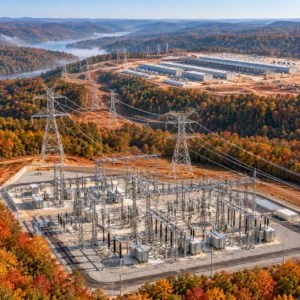
The Tulsa sites make medium-voltage switchgear, low-voltage switchboards, electrical enclosures, industrial controls and custom-fabricated copper busbar. None of this is glamorous. All of it sits between the grid connection and the racks, and long waits for this kind of electrical gear have become a common reason AI data center schedules slip.
Crusoe says the Tulsa plants have already supplied more than 2,500 switchboards to Abilene. More than 300 local craft workers now build components across the two sites. When the first facility opened in 2024, the company expected to employ 100.
Cully Cavness, Crusoe’s co-founder, president and chief strategy officer, put the rationale plainly: doing its own manufacturing in America is what lets the company move as fast as it does.
That is the case for vertical integration in a single sentence.
Speed Is the Asset Investors Are Now Pricing
For most of the past decade, data center value rested on land, fiber and long leases. In the AI buildout the scarce inputs are different: sites with power, transformers and switchgear, and the ability to turn a power allocation into running compute quickly.
Crusoe calls its model energy first, meaning it secures power before designing the computing infrastructure around it. Its Spark modular data centers are built in the US and are designed to cut deployment timelines from years to weeks. TechCrunch reports that the units can be moved by truck and installed without large construction crews.
Gavin Baker, managing partner and chief investment officer of Atreides Management, said that through its vertically integrated model, “Crusoe owns the entire value chain,” which he described as a structural advantage that compounds as the company builds.
That framing changes the questions developers have to answer.
Who controls the megawatts?
Who controls the equipment that makes them usable?
What the Raise Signals for Developers, Utilities and Investors
Crusoe’s financing is one company’s result, but it shows where the market’s weight is moving. Several implications stand out:
- Developers that have not secured electrical equipment face a growing schedule disadvantage against integrated builders.
- Utilities can expect more large-load applicants that arrive with their own generation plans and equipment supply.
- Modular units make smaller or power-constrained sites viable where a gigawatt campus would never fit.
- Investors are rewarding contracted revenue and delivered megawatts over announced pipelines.
- Domestic equipment factories give host regions skilled manufacturing jobs in addition to the data centers themselves.
- Owning more of the supply chain shortens schedules, but it also concentrates execution risk inside one balance sheet.
The last point is worth keeping in view. An integrated model compresses timelines because one team controls power, buildings, equipment and customers. It also means the operator absorbs every constraint along that chain itself rather than passing it to a supplier.
The Next Test Is Turning Contracts Into Capacity
Crusoe has also strengthened its board. Cloudflare chief financial officer Thomas Seifert, former Digital Realty chief executive Bill Stein and Redwood Materials chief executive JB Straubel are joining as independent directors. The company now has more than 1,800 employees across five countries and has added offices in Bellevue, Washington, and New York City.
These appointments add capital markets, data center operations and manufacturing experience, which is what a company needs to scale from one operating gigawatt to six.
That makes execution critical.
Over the next phase, results will be measured in energized megawatts, Spark units in the field and switchgear coming off Tulsa production lines on schedule. If Crusoe delivers, the model of sourcing power, building the equipment and selling the compute under one roof is likely to become a template other builders try to copy.
AI infrastructure money has always followed the megawatts.
Now it is also following whoever can build the gear that brings them online.